
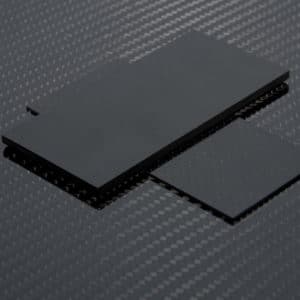


A foam core between two carbon skins makes a panel many times stiffer for very little extra weight. But a cored panel isn't solid carbon. Here's what you give up, and how to deal with each.
Dents and point loads
The skins are thin and the foam behind them is soft, so a heel, chair leg or dropped tool can dent or punch through where solid carbon wouldn't. Spread the load with a pad, or use thicker skins where it gets walked on or knocked.
Fixings
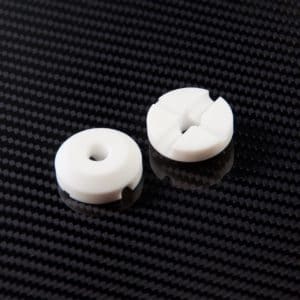
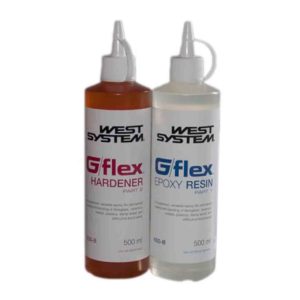
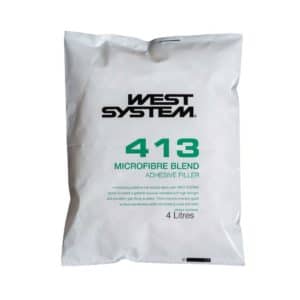
Bolts and screws crush the foam. Bond in inserts, or cut out the foam around the hole and fill it with resin and filler before drilling.
Edges
A cut edge shows the foam and is easily damaged. Close it out with resin and filler or a wrap of fabric.
Heat
The foam softens at a lower temperature than cured epoxy. Keep below the core's max working temperature, including when post-curing.
Space and shape
A cored panel is thicker, and tight curves need a scored (contour-cut) core.
Making it
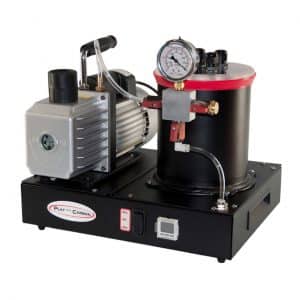
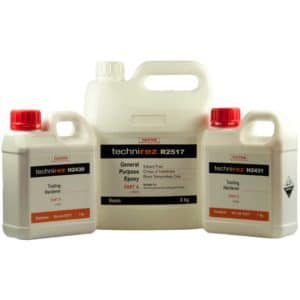
The core has to be bonded fully to both skins, usually under vacuum. A dry patch between core and skin is where a cored panel usually fails.
Work out a panel of your own: thickness, weight and stiffness against solid carbon, in the Cored panel calculator.